Ready to Schedule Your First Visit?
Take the next step toward feeling better.
Request your appointment online or call our office to get started today.
Request your appointment online or call our office to get started today.

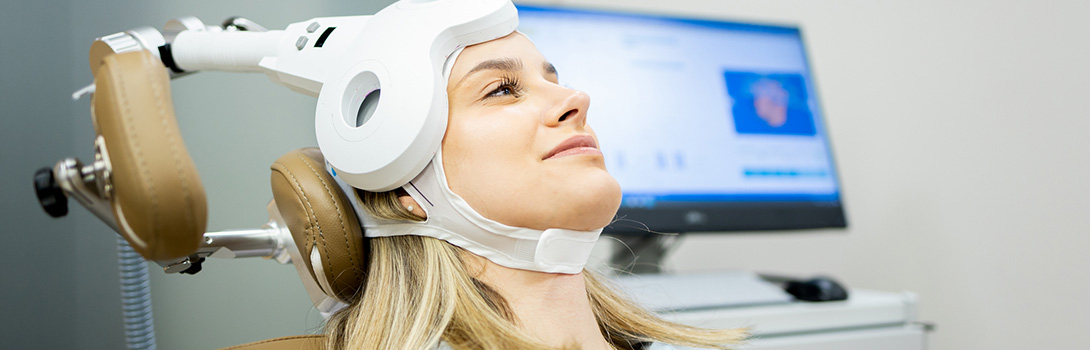
At Connecticut Behavioral Health Associates, we understand that living with chronic depression can be overwhelming. When traditional treatments like medication and talk therapy don’t provide lasting relief, it’s easy to feel discouraged. That’s why our team is proud to offer an innovative, evidence-based option for those seeking a new path forward: Transcranial Magnetic Stimulation.
Transcranial Magnetic Stimulation (TMS) is a non-invasive, FDA-approved therapy that uses magnetic pulses to stimulate brain areas involved in mood regulation.
TMS offers renewed hope for individuals struggling with Major Depressive Disorder who haven’t responded to other forms of treatment. At Connecticut Behavioral Health Associates, our goal is to make TMS treatment as supportive and accessible as possible. We’ve created a welcoming environment where clients can receive high-quality care and begin to regain control of their emotional well-being.
CBHA offers TMS across multiple Connecticut locations with eligibility reviews, insurance guidance, and flexible payment options to help you get started.
Transcranial Magnetic Stimulation is a form of neuromodulation that uses magnetic fields to stimulate nerve cells in the brain. It specifically targets the prefrontal cortex, which is involved in mood regulation and emotional processing. For individuals with depression, this region of the brain often shows reduced activity. TMS helps “wake up” these neural pathways and encourages more balanced brain function.
Unlike electroconvulsive therapy (ECT), TMS does not require anesthesia, sedation, or recovery time.
Sessions are done awake, without anesthesia, typically 5 days a week for 6–9 weeks; many people notice gradual improvements in mood, energy, or focus over time.
Treatment typically takes place five days per week over the course of six to nine weeks, with each session lasting between 20 and 37 minutes depending on your treatment plan and the protocol being used. The process is painless, although some clients report mild scalp discomfort or a light tapping sensation during or shortly after the session. These effects are generally temporary and tend to lessen as treatment progresses.
TMS is offered at several CBHA locations across Connecticut, including New London, Norwich, Pawcatuck, Southington, and Glastonbury. Your treatment begins with a consultation to determine whether TMS is appropriate for your condition. This includes a comprehensive review of your psychiatric history, current symptoms, previous treatments, and any underlying health concerns.
If TMS is a good fit for your needs, our providers will develop a treatment schedule tailored to your goals. You’ll attend sessions on weekdays, where a trained technician will position the TMS coil against your scalp and initiate the magnetic pulses. The sessions take place in a quiet, private space where you can relax or listen to music during the treatment.
TMS therapy is cumulative, meaning that symptom improvement builds gradually over time. Some clients notice changes in mood, energy, or focus within a few weeks, while others may take longer. Throughout the process, our team will monitor your progress closely and provide continued support.
TMS is approved by the FDA for adults diagnosed with Major Depressive Disorder who have not achieved satisfactory results with antidepressant medication and psychotherapy. To qualify for insurance coverage, most plans require the following criteria:
Even if you don’t meet these insurance guidelines, you may still be eligible for TMS treatment. Connecticut Behavioral Health Associates offers flexible payment options and a sliding fee scale to help make this therapy accessible to more individuals.
In addition to its proven benefits for depression, TMS is being researched and used around the world for a range of other mental health and neurological conditions. While these uses are not yet covered by insurance in most cases, research shows promising results for:
If you or someone you care about is facing one of these challenges, TMS may still be a valuable treatment option. Our team is happy to review your case and explore whether off-label TMS therapy could be beneficial for you.
Starting TMS therapy at Connecticut Behavioral Health Associates is straightforward. We welcome both self-referrals and professional referrals. If you’re a client, family member, or licensed provider interested in outpatient TMS services, you can contact us in one of the following ways:
For professional referrals from inpatient or intensive outpatient facilities, hospitals, or rehab centers, we ask that you submit the following documents at least three business days before client discharge:
These documents can be faxed to our office at (860) 823-1170.
At Connecticut Behavioral Health Associates, we are committed to offering advanced, evidence-based treatment options backed by clinical expertise and compassionate care. We understand how frustrating it can be when depression doesn’t respond to standard treatments, and we are here to help you explore new options with confidence and hope.
Transcranial Magnetic Stimulation may not be a first step for everyone, but for those who have struggled to find relief, it can be a life-changing one. If you’re ready to learn more or want to speak with someone about whether TMS is right for you, contact us today.